
Ancient Fisheries
Long before the mills and the steamboats, the shoals of the Chattahoochee fed a people — until they were driven west.
The Marker
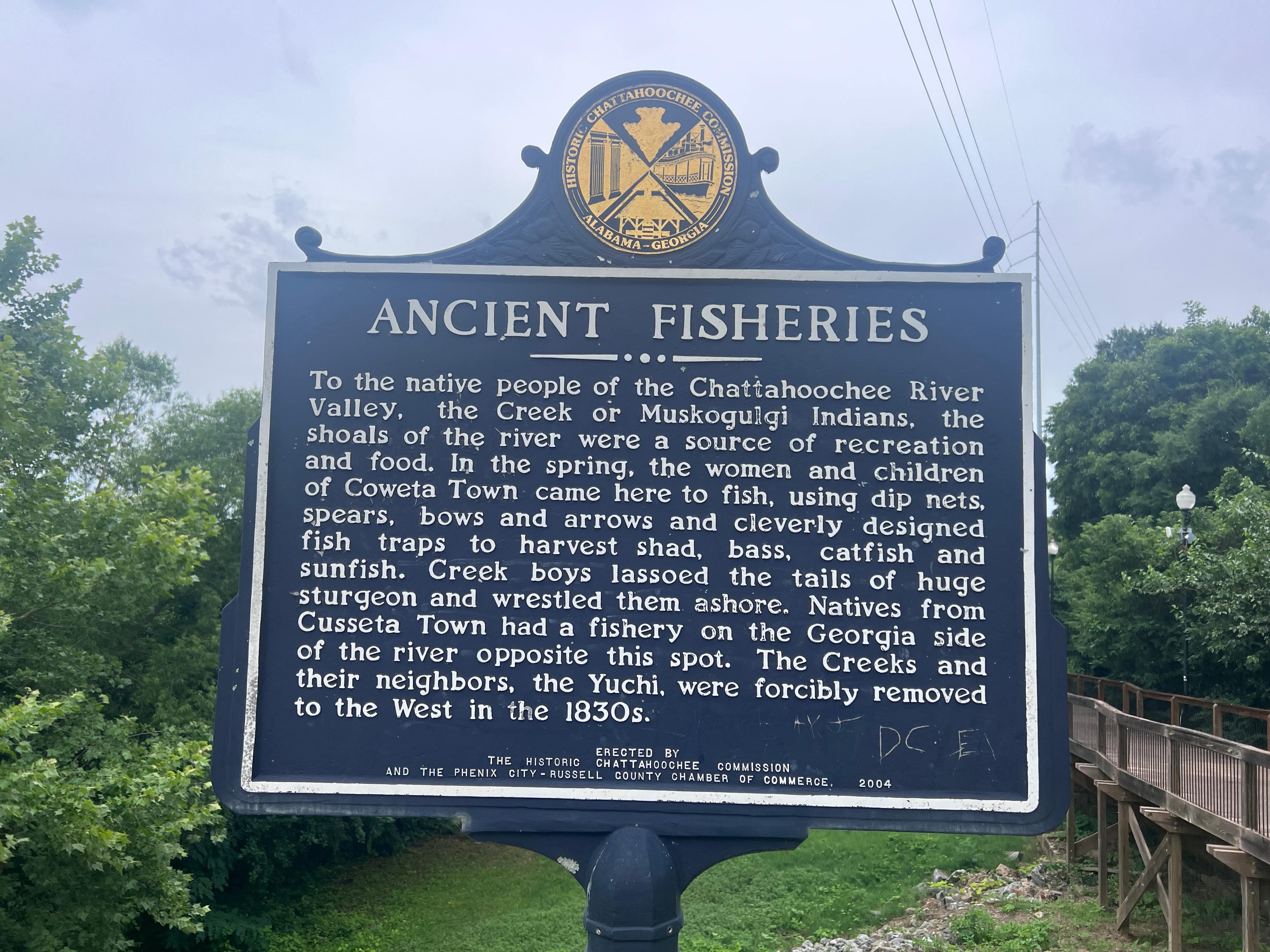
To the native people of the Chattahoochee River Valley, the Creek or Muskogulgi Indians, the shoals of the river were a source of recreation and food. In the spring, the women and children of Coweta Town came here to fish, using dip nets, spears, bows and arrows and cleverly designed fish traps to harvest shad, bass, catfish and sunfish. Creek boys lassoed the tails of huge sturgeon and wrestled them ashore. Natives from Cusseta Town had a fishery on the Georgia side of the river opposite this spot. The Creeks and their neighbors, the Yuchi, were forcibly removed to the West in the 1830s.
Erected by The Historic Chattahoochee Commission and the Phenix City–Russell County Chamber of Commerce, 2004.
Where it is
Street View, oriented toward the marker.
Sources
- Menawa, a Creek warrior — Lithograph after the portrait by Charles Bird King; from McKenney & Hall, History of the Indian Tribes of North America (1836–1844) · Public domain (published 1830s–40s; artist d. 1862, well over 100 years ago).
- Creek Indian Removal — Encyclopedia of Alabama
- Treaty of Cusseta (1832) — Encyclopedia of Alabama
- Yuchis in Alabama — Encyclopedia of Alabama
- Ancient Fisheries · Marker text is public factual information; the photograph is © the project owner.
- Muscogee (Creek) Indians — New Georgia Encyclopedia
About this film
The cinematic period scenes are AI-generated — a dramatized visualization, not real historical footage.
The narration is an AI-generated voice, not a human recording.
Archival imagery:
- Menawa, a Muscogee (Creek) leader who fought removal — hand-colored lithograph after Charles Bird King, McKenney & Hall (1830s); public domain (Wikimedia Commons).
More Markers
Nearby stories worth a look.

The Tie-Snake
Phenix City, Alabama
The Creek told of a serpent that dragged people beneath the Chattahoochee. The folktales recorded alongside it would echo, years later, in the Uncle Remus stories.
Freedom Day
Columbus, Georgia
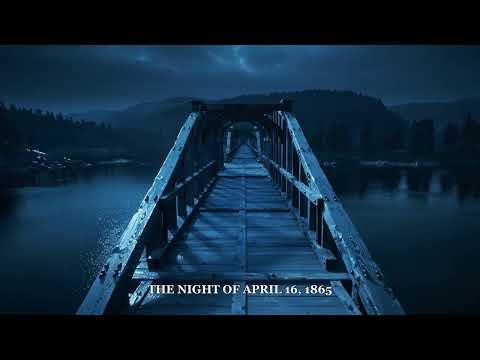
April 16, 1865 — the day the enslaved people of Columbus, Georgia woke as slaves and went to sleep free.

George Parker Swift I
Columbus, Georgia
A young man from Massachusetts, a cotton empire on the Chattahoochee, a city burned in the Civil War — and built again.